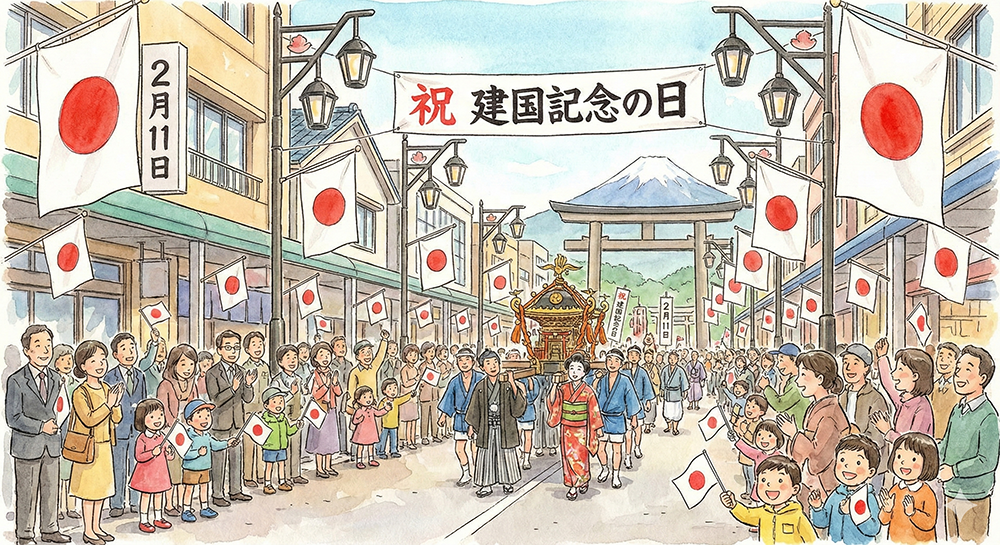
February 11 is Kenkoku Kinen no Hi (National Foundation Day), when schools and government offices across Japan close.
On this day, the Japanese national flag (the Hinomaru) is flown on buses, taxis, and government buildings around town.
What are the Japanese celebrating?
In fact, this holiday is a rare kind of commemoration worldwide, established on the basis not of historical fact but of myth. It takes the enthronement date of Emperor Jimmu, the first emperor (660 BCE), as recorded in Nihon Shoki, Japan's oldest chronicle of history, and converts it to February 11 on the modern calendar.
📜 From Kigensetsu to National Foundation Day
This holiday has a history of about 100 years.
It was established as Kigensetsu (Empire Day) in 1873, in the Meiji era, but was abolished in 1948 after the war. Then, after some 20 years of debate, it was revived in 1966 as National Foundation Day.
Why Kenkoku Kinen no Hi and not Kenkoku Kinenbi?
The single syllable no carries great meaning.
- Between myth and history: Emperor Jimmu's enthronement is not an archaeologically proven fact. So rather than asserting "this is the day the nation was founded," the name means "a day to commemorate the founding."
- A compromise after debate: It took 20 years to revive the holiday because of the debate over this mythical character. Adding no made room for a variety of interpretations.
⛩️ Kigensai Held Around the Country
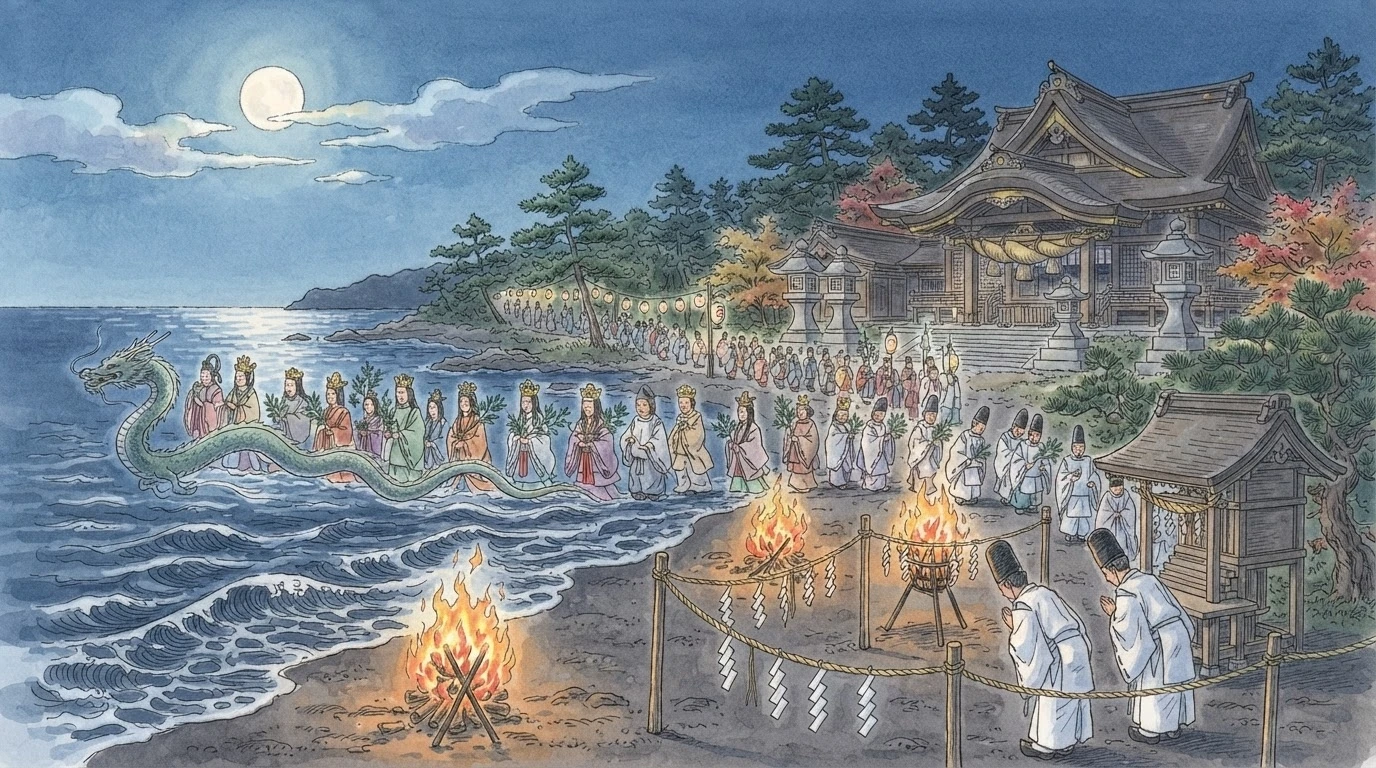
On National Foundation Day, shrines nationwide quietly hold a ceremony called Kigensai.
In particular, a grand ceremony takes place at Kashihara Jingu in Nara Prefecture. This shrine was built on the site where Emperor Jimmu is said to have been enthroned, and the most formal of rites are performed there, including the dispatch of an imperial envoy. At Meiji Jingu in Tokyo and shrines across the country, the national flag is also raised, making it a day to reflect on Japan's history and traditions.
Under the national holidays law, this day is defined as a day "to remember the founding of the nation and cultivate a love for the country."
There are no flashy events, but it is a quiet holiday of deep meaning, when the Japanese reflect on the origins of their nation.