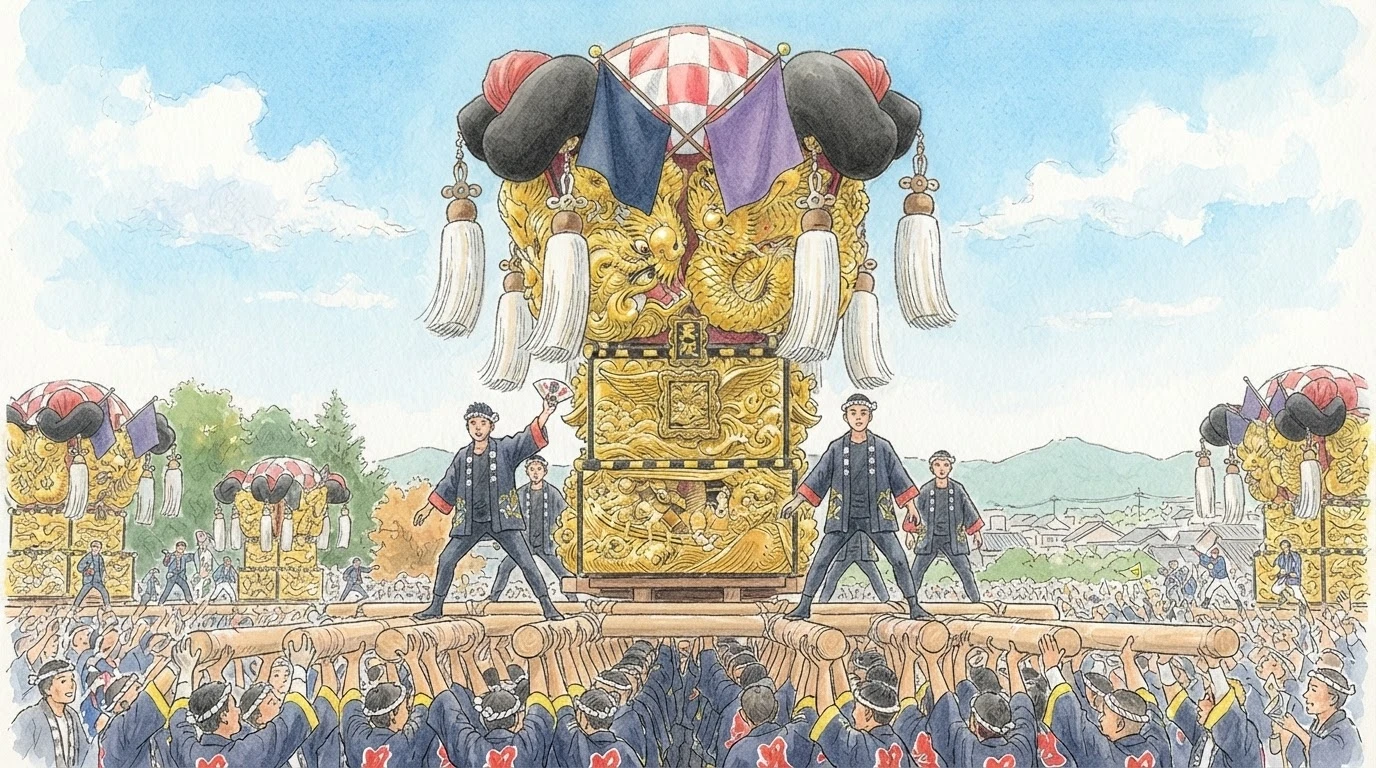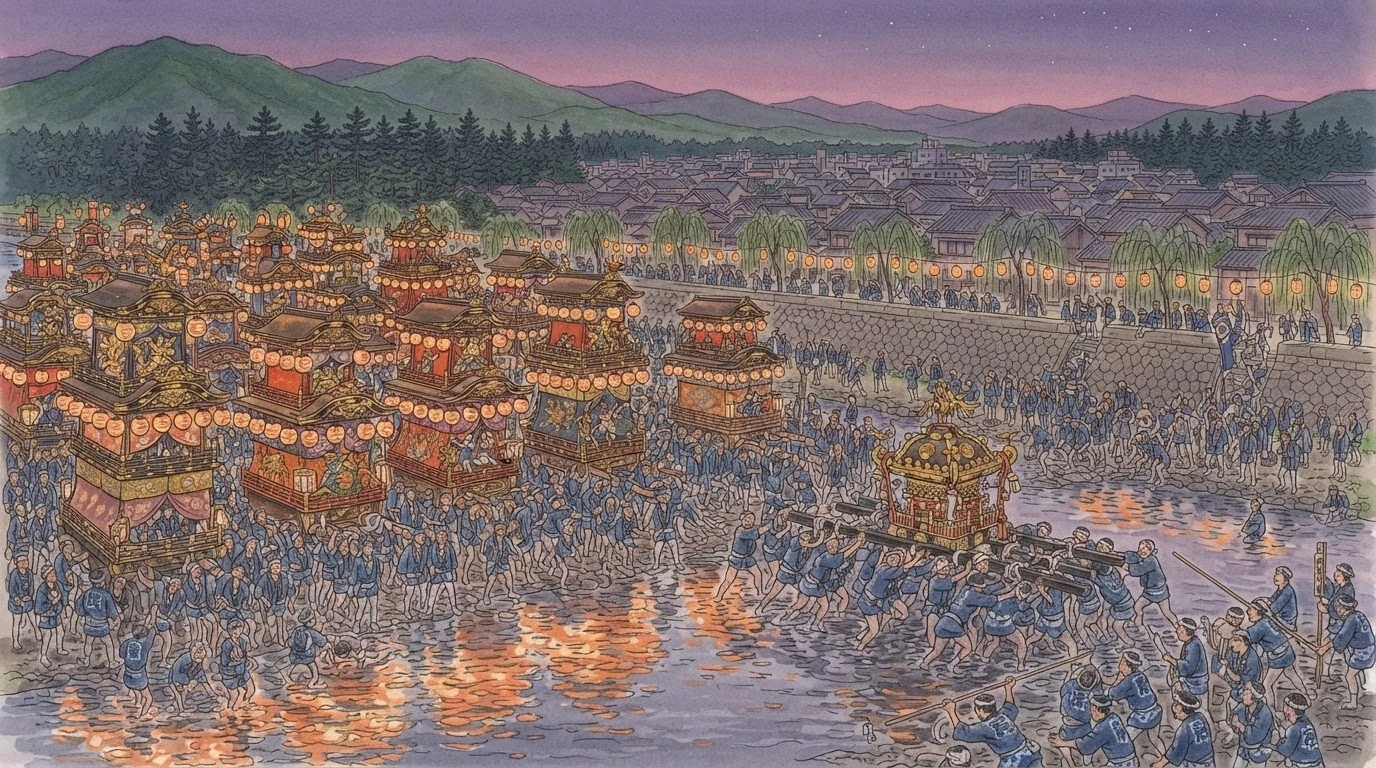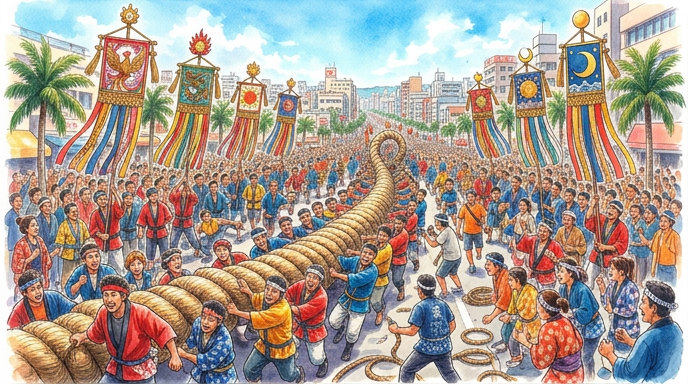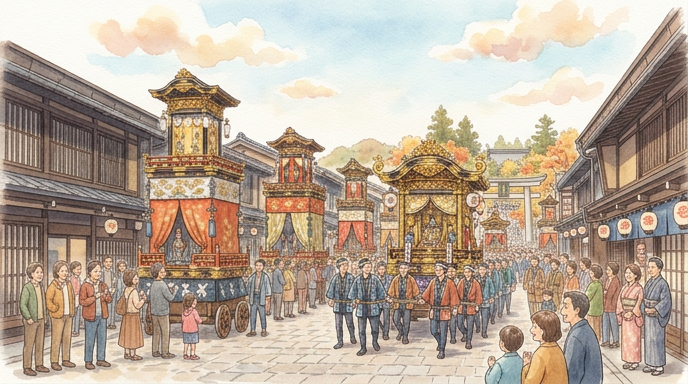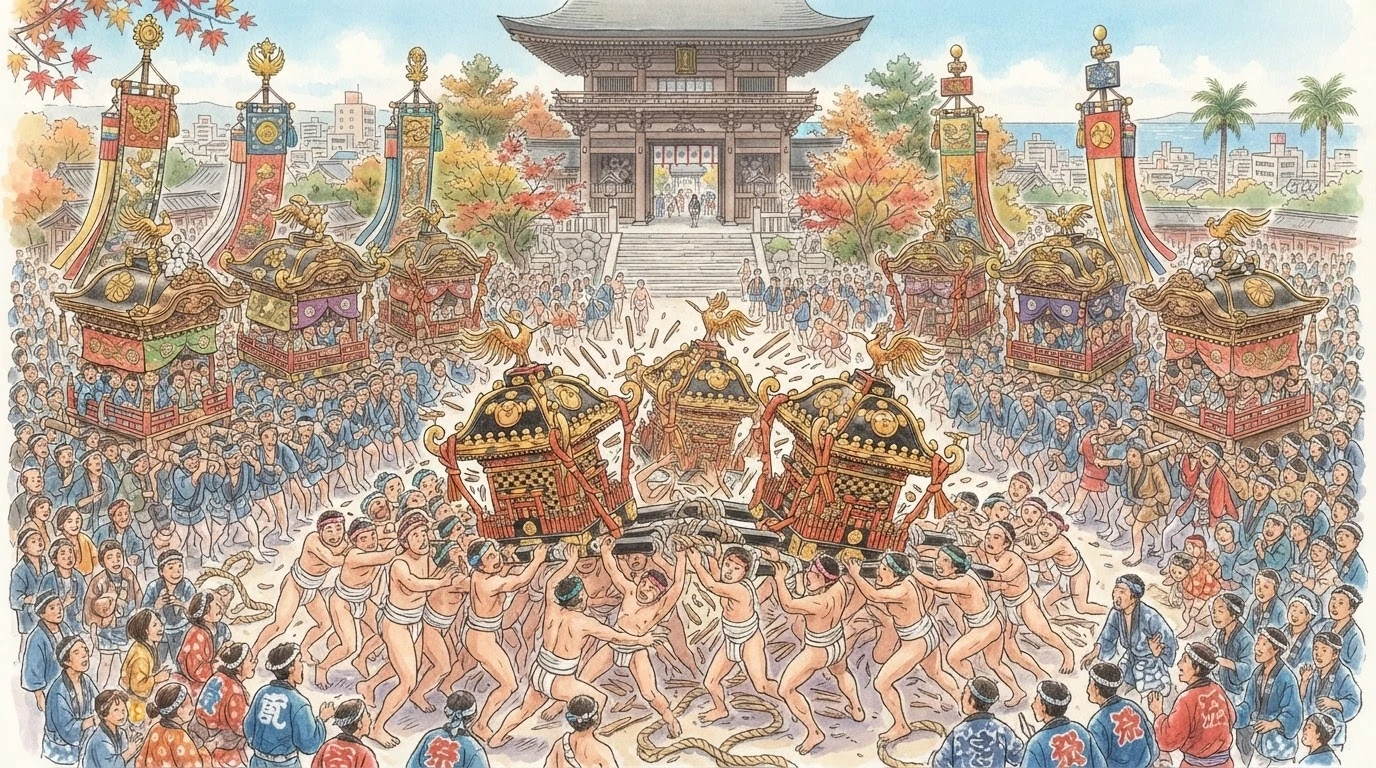
It is known as the festival that concludes autumn in Banshu Plain.Nada no Kenka Matsuri. It is a regular autumn festival held on October 14th and 15th every year at Matsubara Hachiman Jinja in Shirahama-cho, Himeji City, Hyogo Prefecture.It has come to be known as the ``Fighting Festival'' because of the sight of three mikoshi colliding with each other and seven gorgeous floats competing with each other.
It is counted as one of Japan's three major mikoshi shrines, and the spirit that the parishioners of the former Nada Shichiga Village spent a year preparing for is released all at once over the course of two days. This is by no means a festival for outsiders, but a festival that local men risk their lives to carry. When you feel the heat, you can understand why this festival is called a ``strange festival.''
⛩️ 松原八幡神社と「放生会」の系譜
Matsubara Hachiman Shrine is said to have been founded in 763. It is a shrine that enshrines the so-called Hachiman Three Gods, Shinadawaki no Mikoto (Emperor Ojin), Sonagaashihime no Mikoto (Empress Jingu), and Hima Okami.
The origins of the Kenka Festival are recorded in the medieval topography ``Mineaiki.''Hojoe--It is said to date back to a Buddhist-derived ritual in which a captured creature is released to give thanks for the blessings of life. Hojo-e, which originally started at Usa Hachiman Shrine in Oita Prefecture, has spread to Hachiman-related shrines across the country, and has become established as a regular autumn festival at Matsubara Hachiman Shrine.
The seemingly wild act of ``bumping mikoshi together'' actually makes sense. Violently shaking and hitting the mikoshi pleases the gods, increases its power, and brings rich fruit to the parishioners - such beliefs can be seen all over the country, and the Nada Fighting Festival remains one of the most violent forms of it.
🥁 旧七ヶ村と、それぞれの誇り
The main attraction of the festival is the shrine parishioner area of Matsubara Hachiman Shrine.Former Nada Shichiga Village. Even now, each village has its own food stall and expresses its individuality with its unique crest and headband color. The shrine entrance ceremony takes place in a fixed order every year.
| Order of entering the shrine | Village (current place name) | Color of hornbeam (headband) | Features |
|---|---|---|---|
| 1 | Higashiyama | pink | Sterling silver imitation jewel, Sennari gourd crest |
| 2 | Kiba (Kiba) | young green | Kikusui crest, welcome lantern |
| 3 | Matsubara | 赤 | Shachi and lion stalls are on the left and right of the pseudo-hoju. |
| 4 | Yaka | yellow red | Inherited the Tojo Taiko drum made in Genroku 15 (1702) |
| 5 | Mega | vermilion red | Approximately 2.5 tons, the heaviest in the former Shichiga Village. Lift it up with “douche” |
| 6 | Usazaki (Usazaki) | 黄 | The rising dragon crest and decorations are unified with “Ryoma” |
| 7 | Nakamura (Nakamura) | 青 | Five-seven paulownia crests, “terimukuri” on the roof |
The weight of a food stall varies depending on the village, but it is generally around 2 tons. The Tsumeshika stall is the heaviest at approximately 2.5 tons, and is known for its unique carrying method called ``dōtsuki,'' in which the carrying rod is moved up and down as if slamming into the ground. The bearer isNerikoThey carry the stalls in a shimei style similar to a sumo mawashi, and wear headbands in the village's symbol color. There may be over 100 kneaders attached to a single stall, and over 2,000 men participate in the kneading in the entire former Shichiga Village.
💥 神輿三基がぶつかり、木っ端が飛ぶ
The biggest highlight of the festival is the one held at the main shrine (October 15th)Mikoshi matchingis. The shrine parishioners carry the three mikoshi (Ichinomaru, Ninomaru, and Sannomaru) where the gods have been moved, and violently collide with each other head-on in the precincts of Matsubara Hachiman Shrine.
This mikoshi is not something to be ``treasured'' like other festivals. It is said that the more it breaks, the happier the gods will be, so they continue to carry it until the roof caves in, the pillars break, and the decorations fly off. By the time the festival is over, the original shape is no longer preserved, and it is repaired and rebuilt for the following year - a huge amount of money is spent each year.
The ``neriban'' in charge of the mikoshi are rotated once every seven years in the former Shichiga Village. The year of Neriban is a big project involving the entire village, and the men participating perform a purification ceremony called ``Shiokaki'' early in the morning in the sea off Shirahama to purify their minds and bodies before carrying the mikoshi.
📅 2026年 祭礼スケジュール
| date | time | event |
|---|---|---|
| Wednesday, October 14th Yoimiya | From around 11:00 | Food stalls from each village enter the shrine in turn. |
| Same as above | After entering the shrine ~ Evening | Assembling food stalls at the shrine grounds and in front of the shrine |
| Same as above | after sunset | Festival of stalls lit with lanterns and electric lights |
| October 15th (Thursday) Motomiya | early morning | Matsubara's lion float performs the dance, and the neriban's tide scraping |
| Same as above | in the morning | Shrine entry of stalls from each village, stall kneading |
| Same as above | afternoon | Bringing together the mikoshi (in the precincts) → Transfer to Mt. Otabiyama |
| Same as above | Afternoon to evening | Mikoshi matching and float parade at Hirobatake at the foot of Mt. Otabiyama |
| Same as above | evening | Descending from Otabiyama, going to each village while practicing |
*Times are estimates for previous years. This may change depending on the progress of the day. For details, please check the official announcement of Matsubara Hachiman Shrine.
📝 観覧のポイント
Shrine viewing (from noon on October 14th):The first highlight of the floats entering the shrine is in front of the tower gate of Matsubara Hachiman Shrine. The tower gate is a stately structure built in 1679 during the Edo period, and the moment the food stalls pass through the gate is a photogenic scene. However, the shrine grounds can be very crowded, so it is recommended that you arrive 1 to 2 hours before the start.
Mikoshi matching at Hirohata (afternoon of October 15th):On the day of the main shrine, the mikoshi ceremony is held in a plaza called Hirobatake at the foot of Mt. Otabiyama.The space is larger than the shrine grounds, and you can see multiple mikoshi and floats. This is the climax of the main shrine.
Safety is our top priority:In 2001 and 2009, there were accidents in which spectators were crushed under portable shrines and floats and died. Never get too close to the food stalls or mikoshi, and please follow the instructions of the security guards and parishioners. Paid seats (specially set up inside the shrine grounds, Hirohata) go on sale from around August every year, and are recommended for safe viewing.
stay:During the festival period, Himeji City and the Shirahama Town area are fully booked, so it's best to make reservations six months to a year in advance. Another option is to base yourself in Kobe or Akashi.
Clothes:The temperature in Himeji in mid-October is around 20℃ during the day, but it gets cold in the mornings and evenings. The grounds are mostly gravel and slopes, so wear comfortable shoes.
🚃 アクセス
| Place of departure | route | Time required |
|---|---|---|
| Tokyo | Shinkansen Nozomi → Himeji → Sanyo Electric Railway | Approximately 3 hours 30 minutes |
| Shin-Osaka | Shinkansen → Himeji → Sanyo Electric Railway | Approximately 1 hour 20 minutes |
| Kobe (Sannomiya) | Sanyo Electric Railway Direct Express | Approximately 1 hour 10 minutes |
| Himeji Station | Sanyo Electric Railway Main Line → Shirahamanomiya Station | Approximately 15 minutes |
| Shirahamanomiya Station | Walk to Matsubara Hachiman Shrine | Approximately 5 minutes |
Shirahamanomiya Station is usually an unmanned station where only local trains stop, but during the festival period, direct express trains and limited express trains will make temporary stops throughout the day, and station staff will be stationed there. Many people visit this area along with sightseeing at Himeji Castle, and Shirahamanomiya Station is only 15 minutes away from Himeji Station. Even a day trip is enough to see the main shrine's highlights.
🔥 「壊れるまで担ぐ」祭りの意味
When you experience Nada's fight festival for the first time, you will be surprised at how intense it is. Some people may be thinking, ``Why would someone destroy a mikoshi of a god?'' However, the feeling behind this festival is similar to other festivals in Japan. The idea is that the best offering to the gods is for the parishioners to do their best.
There are many shrine parishioners who live for these two days, 365 days a year. The Nada Kenka Festival, which concludes Banshu's autumn season, is a festival that is particularly suited to the phrase "burning life" in Japanese festival culture. Please come and experience the heat while paying attention to safety.