For the Japanese, the New Year (Oshogatsu) is more than the start of another year.
It is a deliberate system for settling the past, renewing one's bond with the gods, and "rebooting" the spirit.
Each of the rituals that unfold from the night of December 31 into January has a clear purpose and meaning.
Here we walk through the New Year customs the Japanese follow, step by step: from the Joya no Kane (the year-end temple bells) to Hatsumode (the first shrine visit of the year) and the return of last year's charms.
🔔 Joya no Kane – Erasing 108 Earthly Desires
Late on the night of December 31, the sound of bells rings out from Buddhist temples all over Japan.
It is not the signal for a countdown party. It is the sound of the soul being cleansed.
The bell is struck exactly 108 times. In Buddhism, 108 is the number of bonno (earthly desires) that humans are said to carry.
Anger, envy, attachment: with each strike of the bell, one of these 108 feelings that cloud the mind is let go.
[Fact] Why 108?
There are several explanations, but the best known is this: 6 senses (eyes, ears, nose, tongue, body, mind) × 3 ways of feeling (pleasant, unpleasant, neutral) × 2 states (pure, impure) × 3 times (past, present, future) = 108.
In other words, it is a ritual for resetting to zero every confusion that arises from every combination of sense and time, before the new year begins.
⛩️ Hatsumode – Declaring Your Resolve for the Year
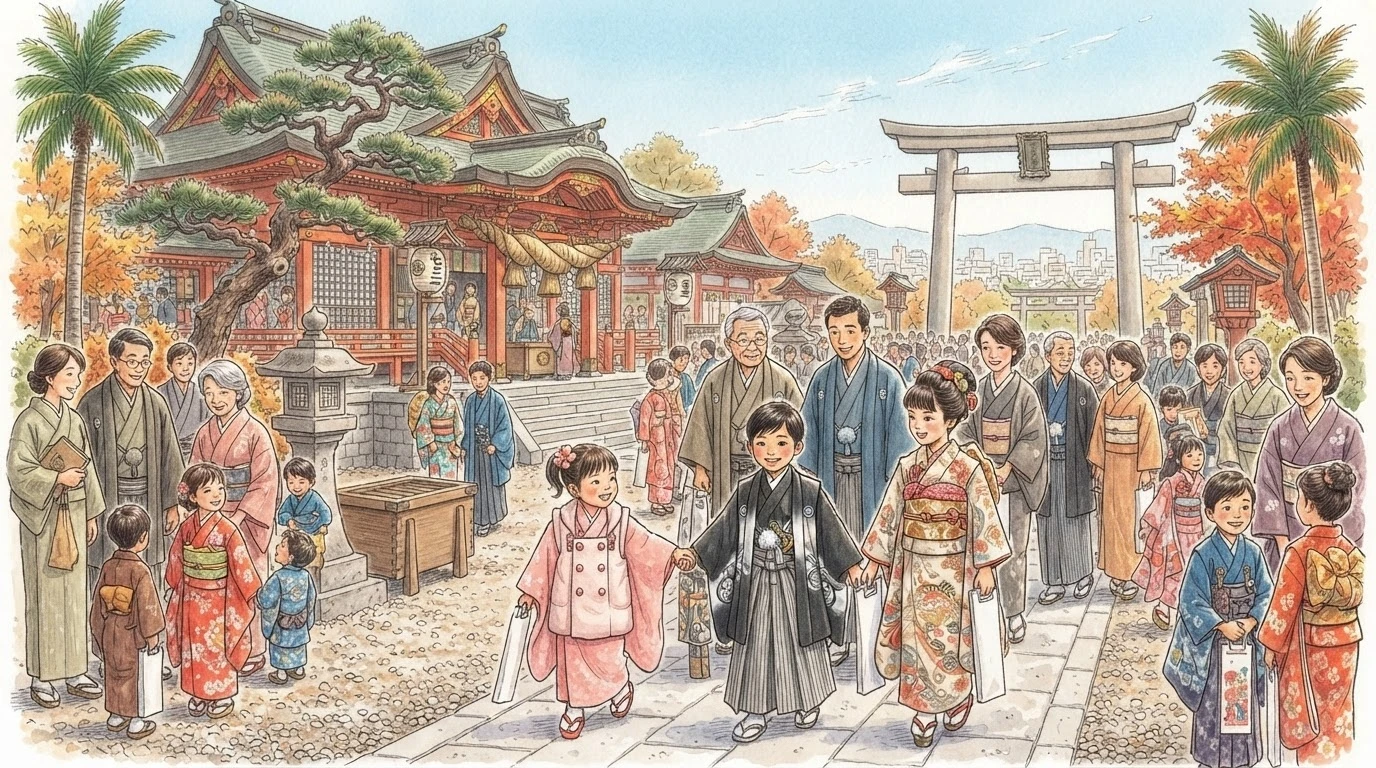
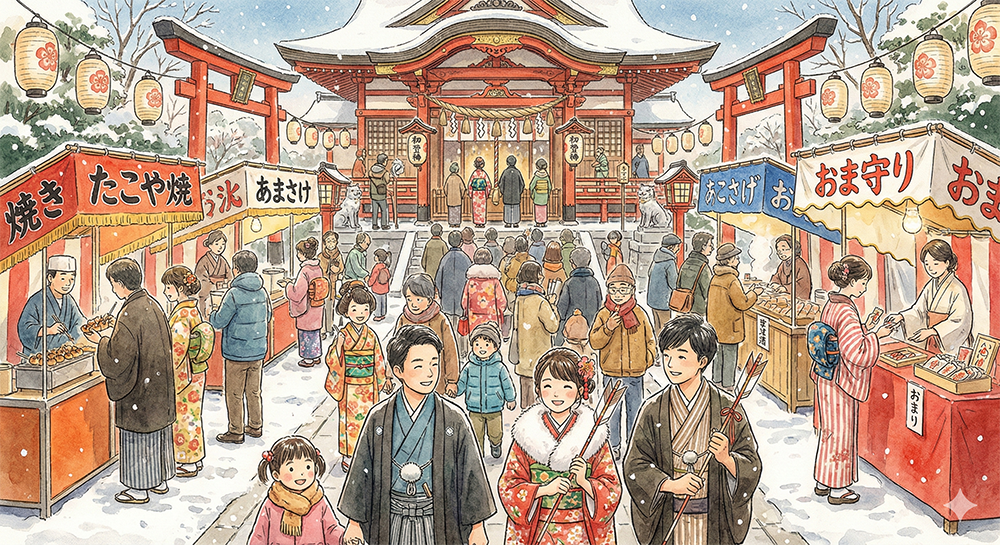
The first visit to a shrine or temple after the New Year is called Hatsumode.
Large shrines such as Meiji Jingu in Tokyo welcome more than 3 million visitors in the first three days of January alone. It is less a religious act than a nationwide custom of stating one's resolve.
You wait in a long line, toss a coin into the offering box when your turn comes, and put your hands together. This is not begging the gods to grant your wishes.
It is a moment to give thanks for having come through the past year safely, and to declare before the gods, in your own words, how you intend to live this year.
| Basic Etiquette for Praying (Two Bows, Two Claps, One Bow) | |
|---|---|
| 1. Offering | Drop a coin into the offering box as a gift to the gods (the amount does not matter). |
| 2. Two bows | Bow deeply twice to show respect to the gods. |
| 3. Two claps | Clap your hands twice in front of your chest. The sound drives away evil and calls the gods. |
| 4. Prayer | With your palms still together, silently offer your thanks and your resolve. |
| 5. One bow | Finish with one more deep bow, then step away. |
🔥 Returning Old Charms – A System of Renewal
When they go for Hatsumode, many Japanese bring along last year's omamori (protective charms) and hamaya (ritual arrows).
Shrine grounds have a dedicated collection point called a kosatsu osamejo, where old charms are returned.
This is not throwing things away. A charm's power is generally thought to last for one year.
After a year of standing in for its owner and absorbing bad luck, a charm is like a filter that has reached its limit.
The returned charms are later purified by priests and burned in a sacred fire. This is called Otakiage. The fire sends the deity that dwelled in each charm back to the sky, with thanks and a proper farewell.
Then you receive (buy) a new charm and enter into a new year of protection.
By repeating this cycle of gratitude, return, and renewal, the Japanese keep their minds refreshed and move forward without dragging the past behind them.
A Note on Omikuji
The omikuji (paper fortune) you draw at the end holds the advice the gods have for you right now.
Rather than rejoicing or despairing over the headline result, such as kichi (good luck) or kyo (bad luck), read the detailed lessons written below it and keep them in mind as your guide for the year. That is the proper way to read an omikuji.