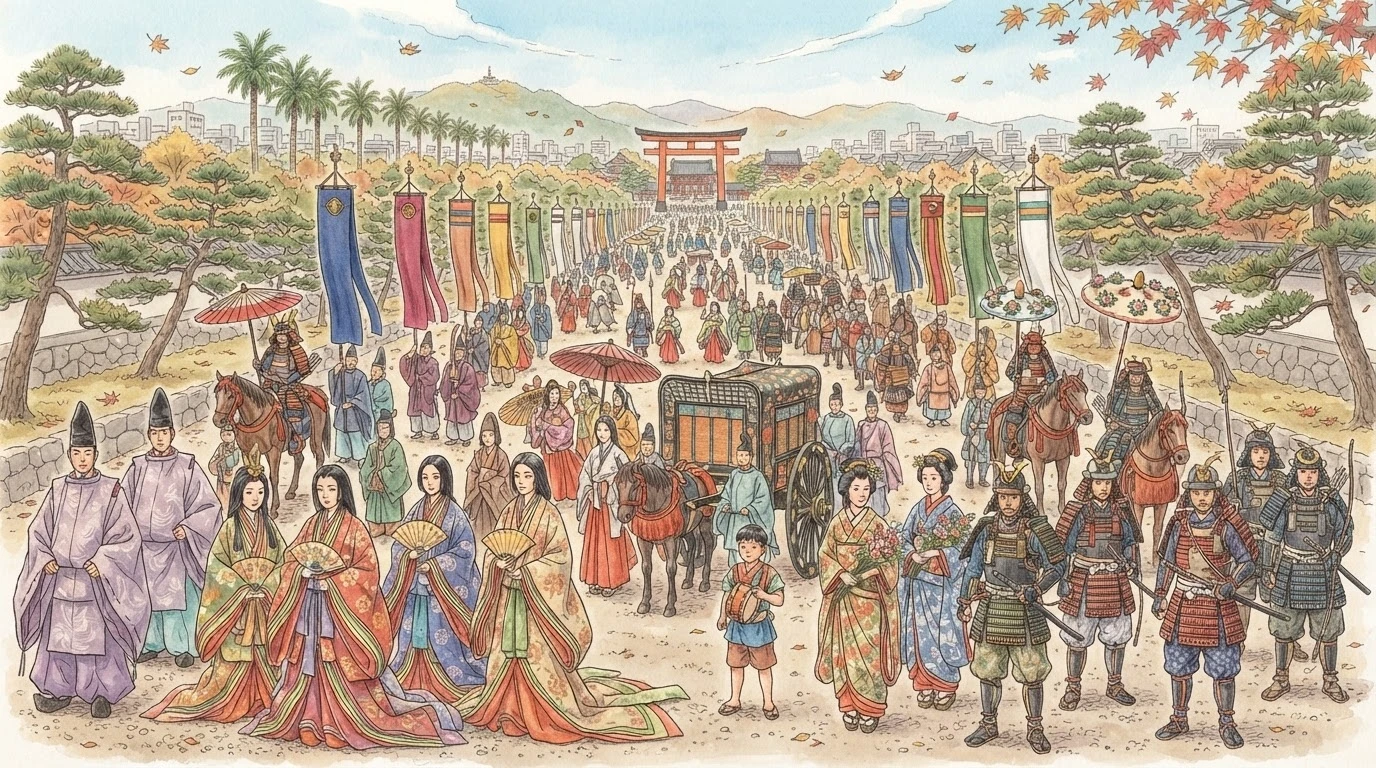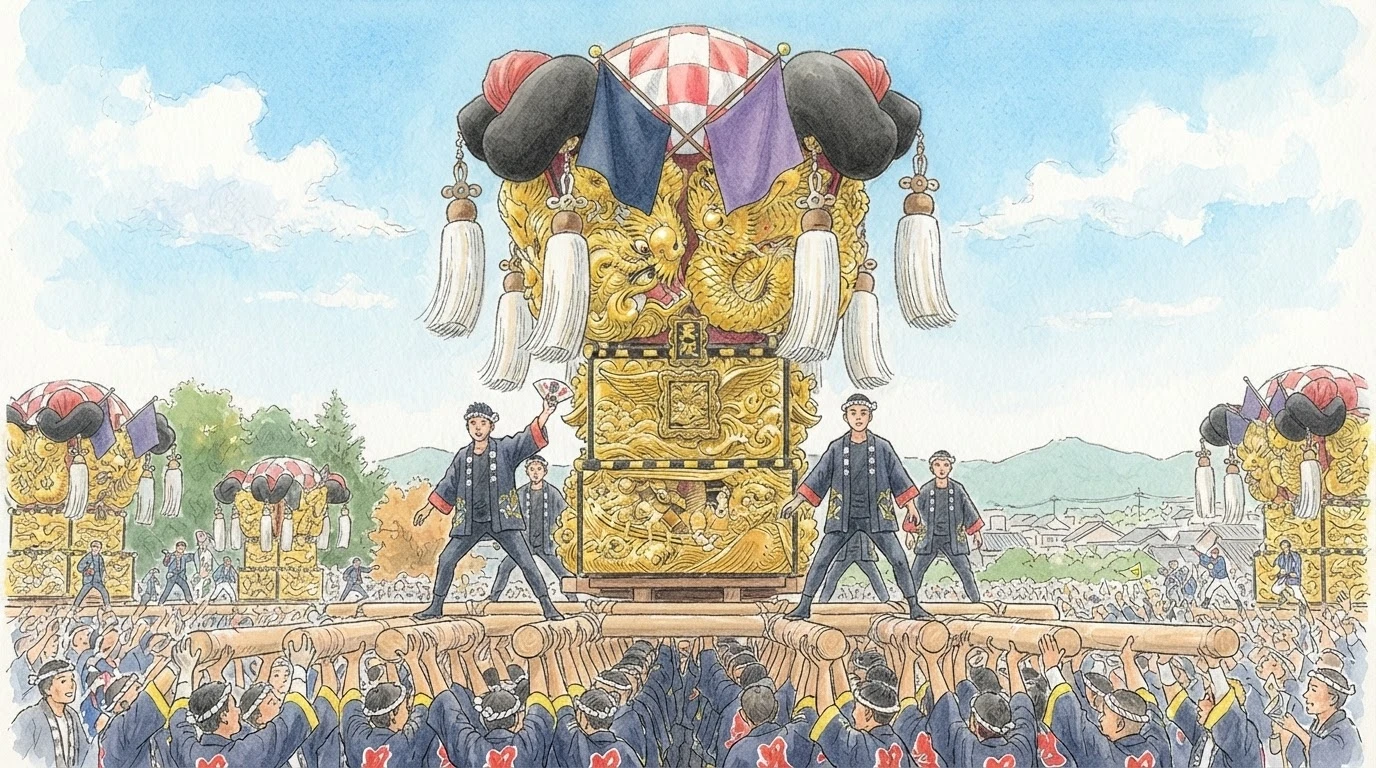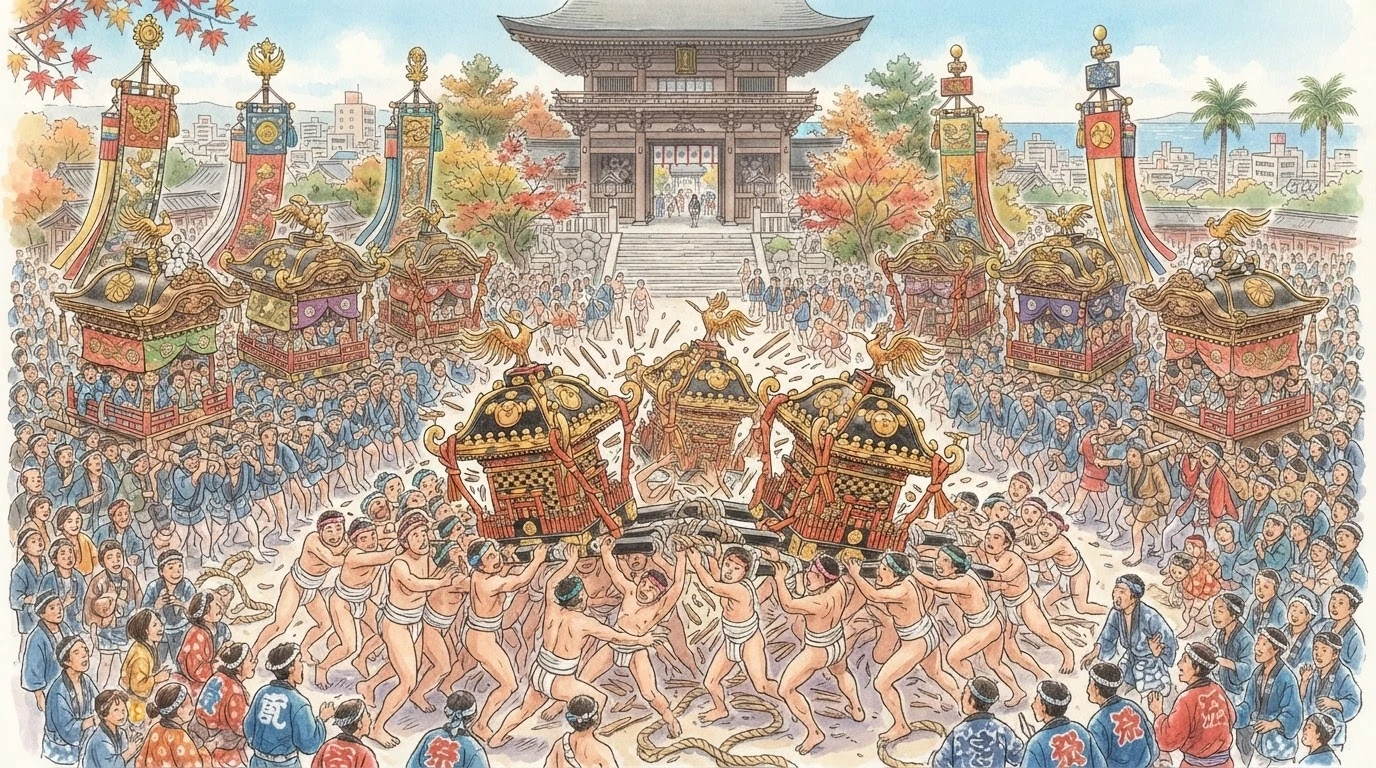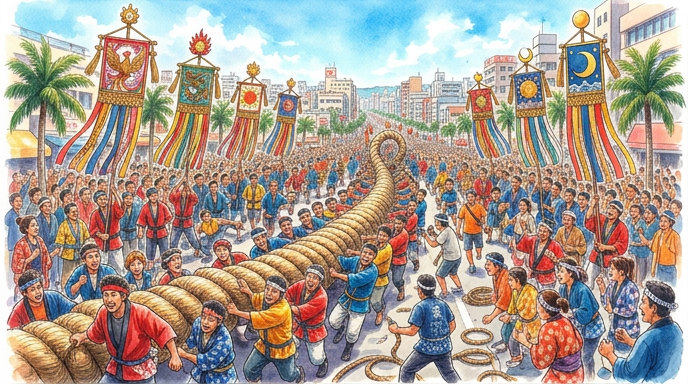
Kyoto's Gion Matsuri is one of Japan's most famous festivals, but festivals called "Gion Matsuri" are not unique to Kyoto. There are hundreds of them all over Japan. From the Tohoku region in the north to Kyushu in the south, in castle towns, port towns, and mountain villages alike, each area has handed down its own Gion Matsuri.
👹 How Faith in Gozu Tenno Spread Nationwide
The reason there are Gion festivals all over Japan is that faith in Gozu Tenno, the deity of Yasaka Shrine, spread throughout the country. Gozu Tenno was considered a god who governed epidemics, and the belief that worshipping and appeasing this god could prevent outbreaks of disease spread to every region from the Heian period onward.
Epidemics were thought to be caused by goryo, the vengeful spirits of those who had died unjust deaths. The goryo-e, rites held to appease these spirits, were the prototype of the Gion Matsuri. Shrines across the country performed kanjo (receiving a share of a deity's spirit) to bring in the deity from Yasaka Shrine in Kyoto, and each began its own Gion Matsuri.
Under the Meiji-era order separating Shinto and Buddhism, the name Gozu Tenno was officially dropped and the enshrined deity was replaced with Susanoo no Mikoto. Yet the festival names and the prayers to drive away epidemics remained unchanged throughout the regions.
Regional Gion Festivals in July 2026
- Narita Gion Matsuri (Narita, Chiba Prefecture), July 10–12: A festival held in the temple town of Naritasan Shinshoji. The highlight is the sobiki, in which 10 floats and festival wagons are hauled up the steep slope of the main approach. About 10 minutes from Narita Airport to Narita Station on the JR or Keisei lines, so you can join right after arriving in Japan.
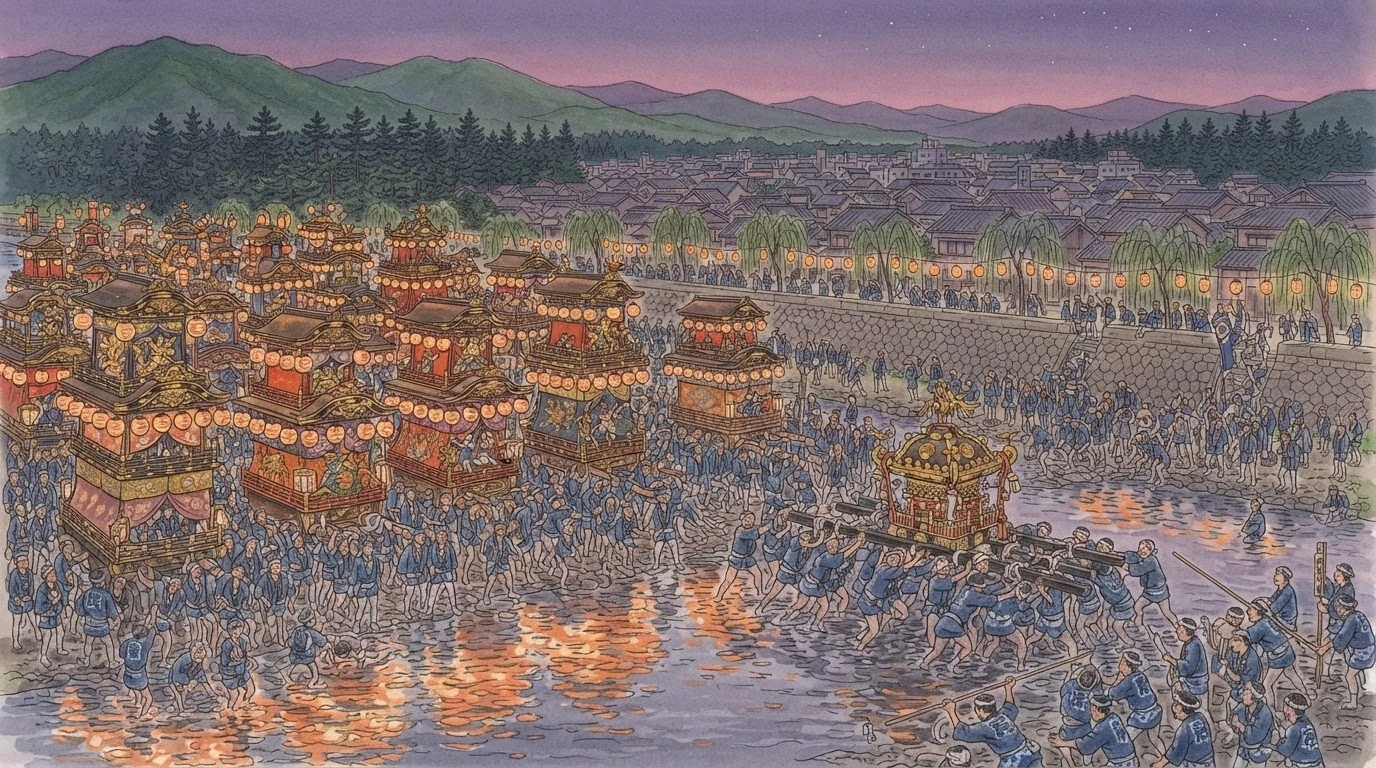
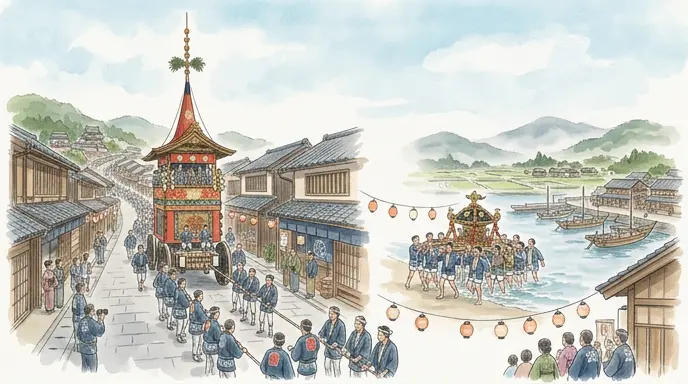
- Tadanoumi Gion Festival and Mikoshi Events (Takehara, Hiroshima Prefecture), July 19: Held in Tadanoumi, a port town on the Seto Inland Sea. It includes the ohama-iri, in which a mikoshi (portable shrine) is carried into the sea, sharing the tradition of purification in the sea seen at Hamaori-sai. Within walking distance of JR Tadanoumi Station, which is also where ferries leave for Okunoshima, known as Rabbit Island.
- Senzaki Gion Festival (Nagato, Yamaguchi Prefecture), July 20–26: Held in Senzaki, a fishing town facing the Sea of Japan. With a float procession and a fireworks display, you can enjoy the simple festival atmosphere of a fishing port. Within walking distance of JR Senzaki Station. The town is also known as the birthplace of Misuzu Kaneko, a poet of children's songs.
- Aizu Tajima Gion Festival (Minamiaizu, Fukushima Prefecture), July 22–24: A festival with more than 800 years of history, designated a national Important Intangible Folk Cultural Property. The Nanahokai Gyoretsu is a procession of women in bridal dress carrying shinsen (food offerings to the gods), a unique ritual not seen at other Gion festivals. Right by Aizu-Tajima Station on the Aizu Railway.
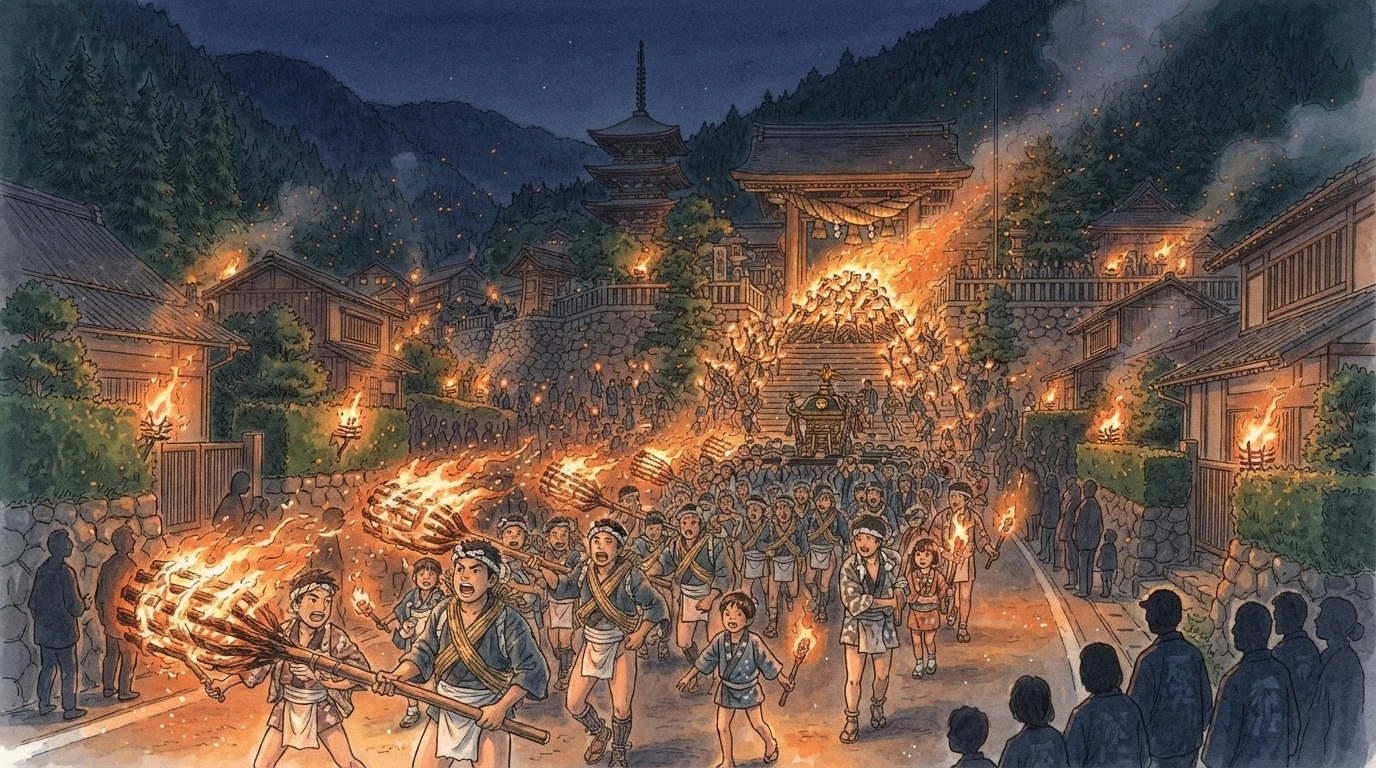
- Nozawa Gion Festival (Nozawa Onsen, Nagano Prefecture), July 25–26: A summer festival in Nozawa Onsen, known as a ski resort. There is a lantern procession and fireworks, and the sight of lanterns making their way through the narrow lanes of the hot spring town is one of a kind. About 25 minutes by bus from JR Iiyama Station.
🗾 A Cultural Network Called "Gion Matsuri"
Regional Gion festivals are not simply smaller versions of Kyoto's. Each has developed in its own way to suit its area's history, industry, and terrain. In seaside towns mikoshi enter the sea, in mountain towns floats climb steep slopes, and in castle towns samurai traditions are reflected in the festival.
What they share is the prayer to drive away epidemics. Even today, after living through the COVID-19 pandemic, the meaning of this prayer has not changed. Visiting a regional Gion festival after seeing Kyoto's lets you feel how the same faith spread across Japan and how it changed. Regional Gion festivals, with fewer tourists, are also places where you can be close to local people and see festivals as they were meant to be.