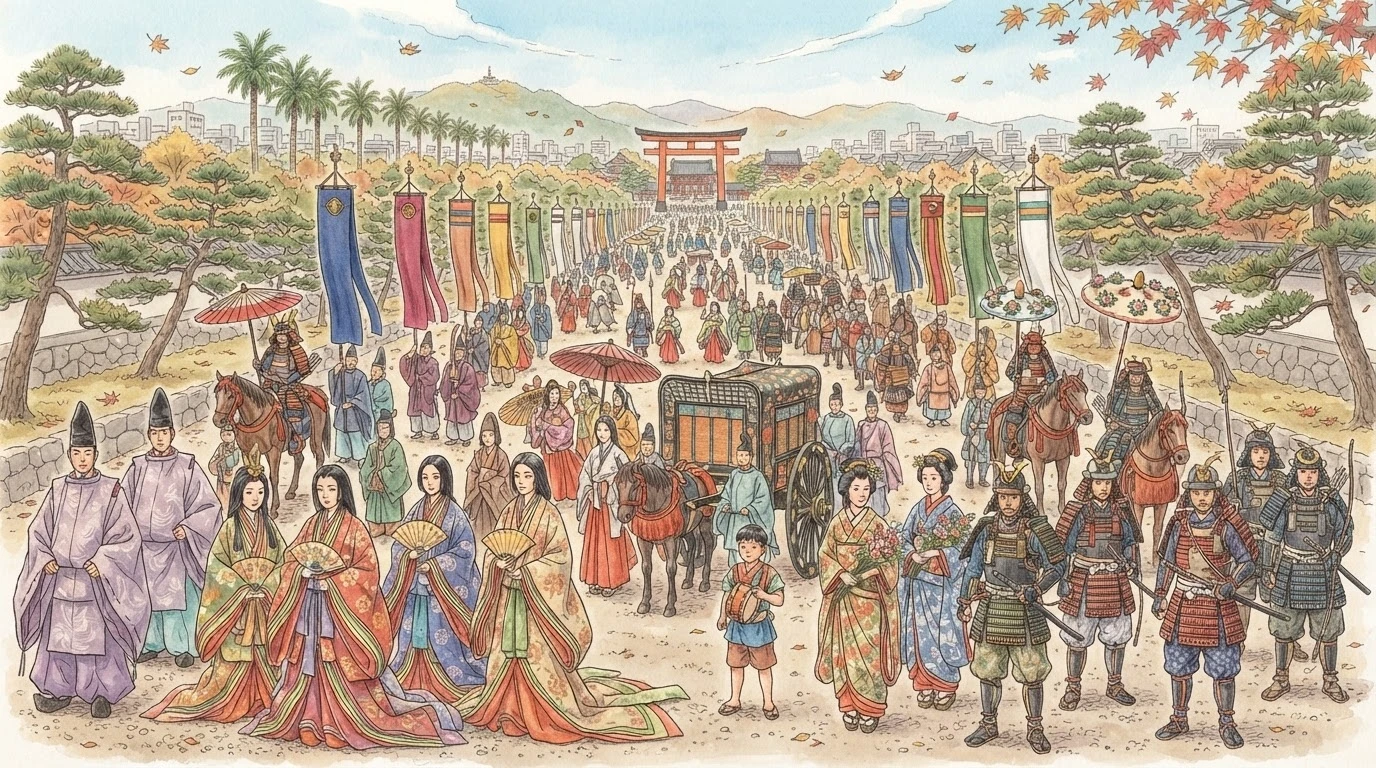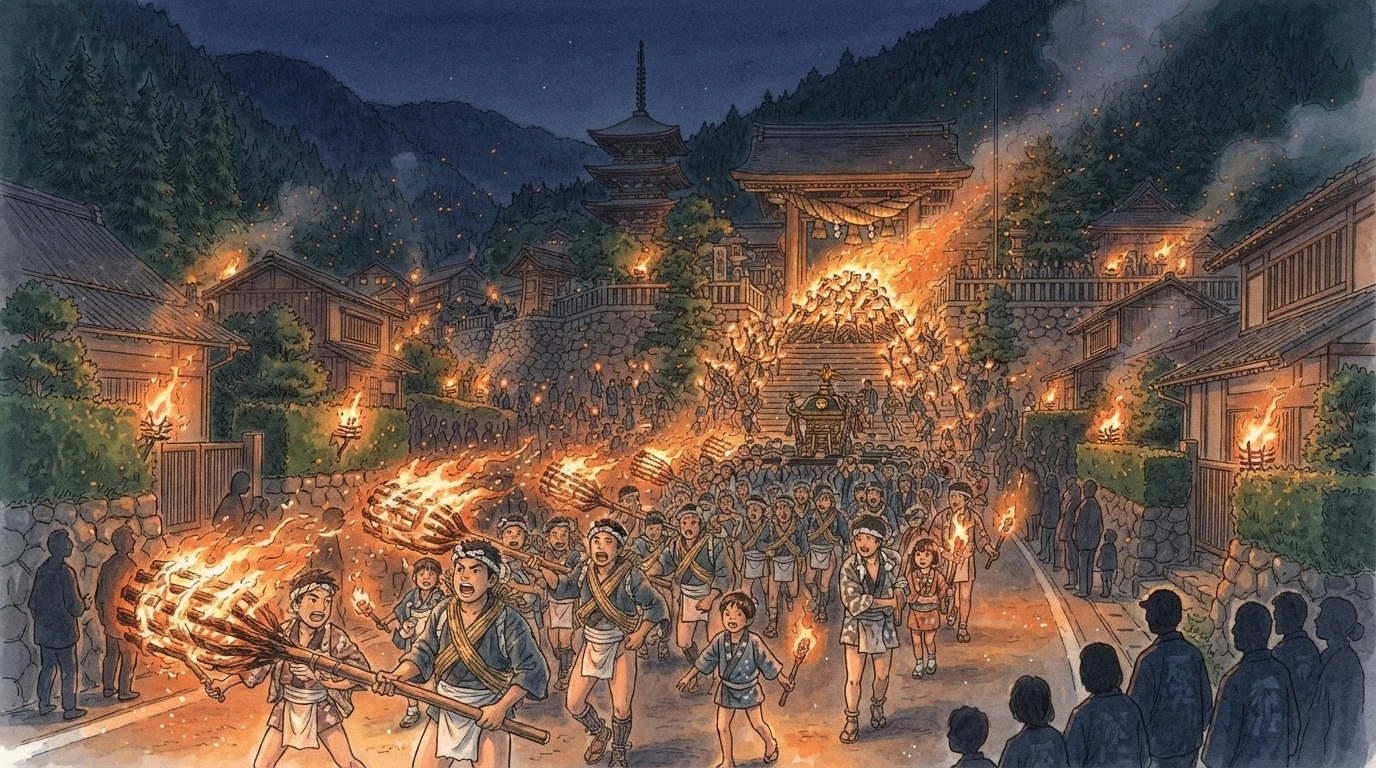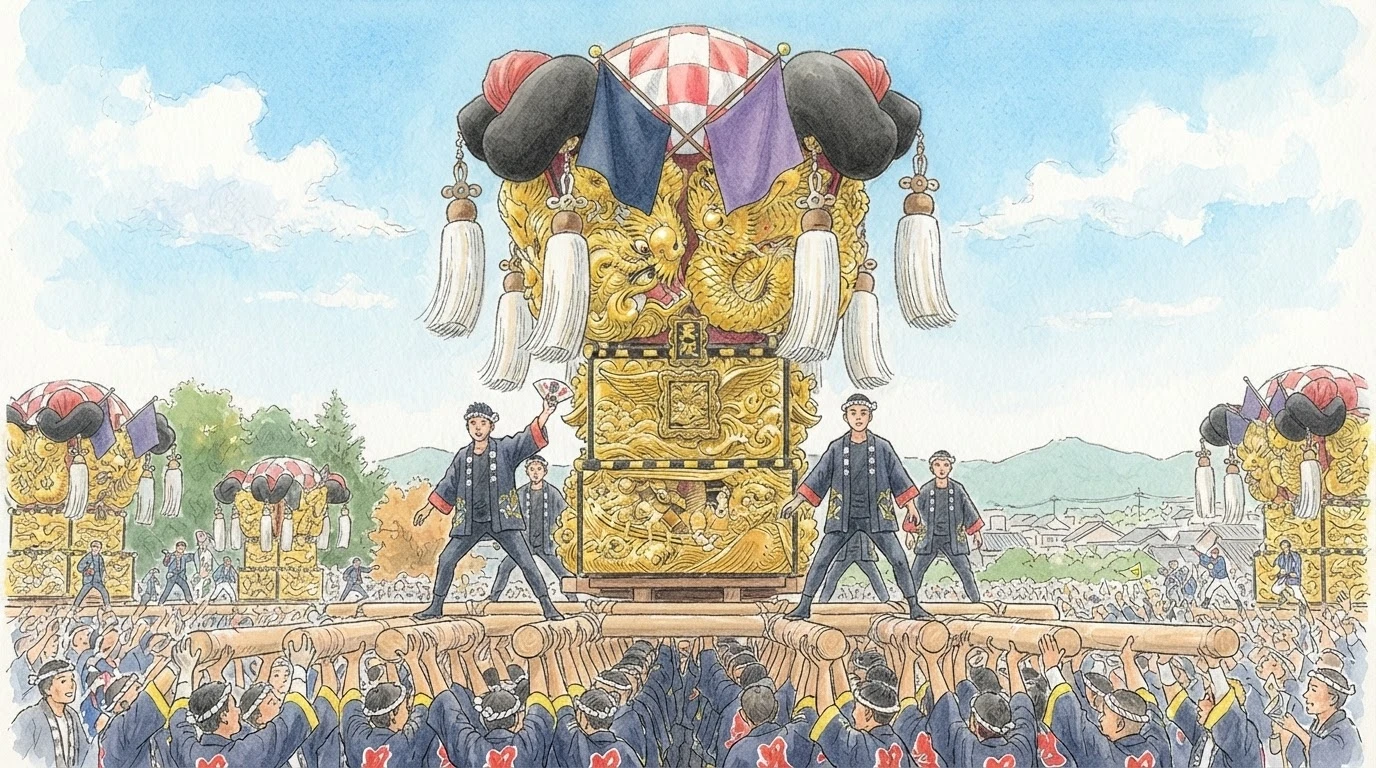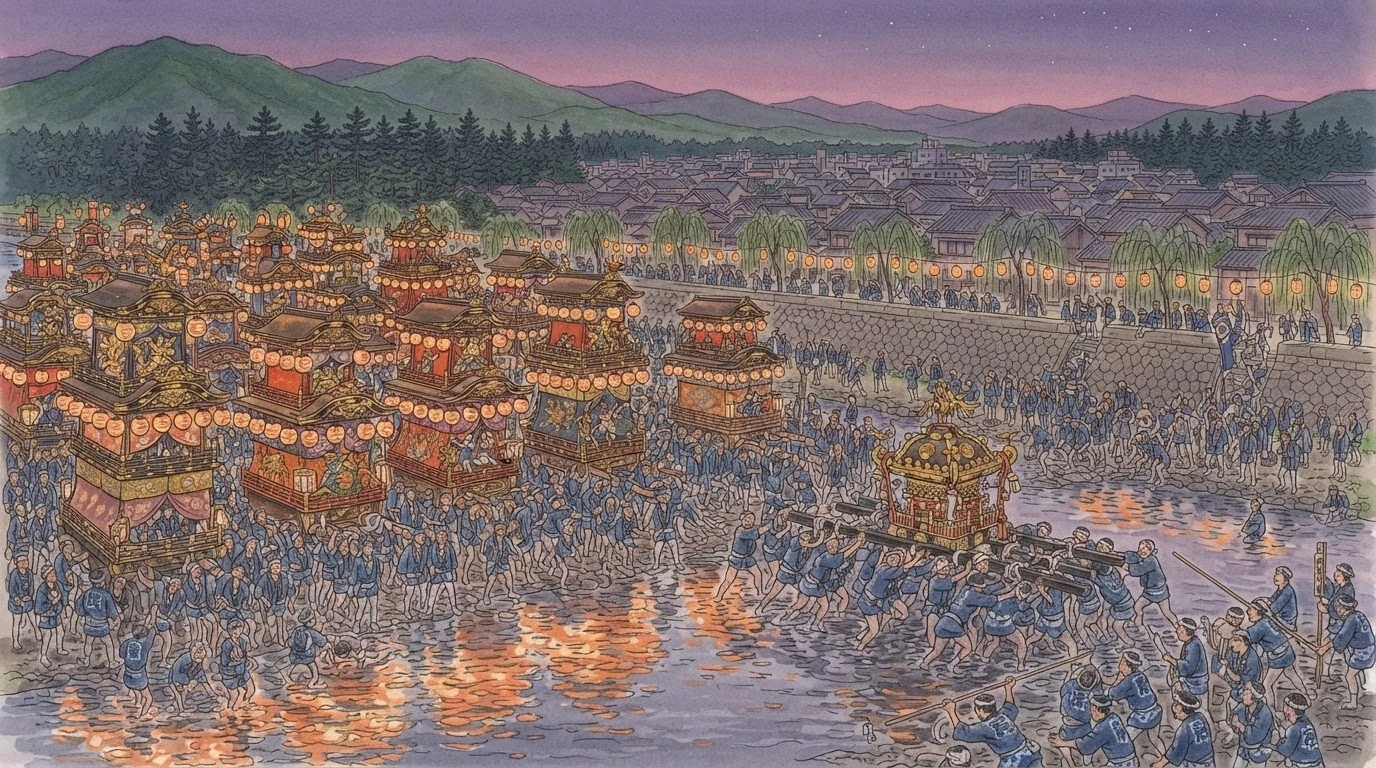
From mid-March through April, shrines across Japan hold Haru-matsuri (spring festivals).
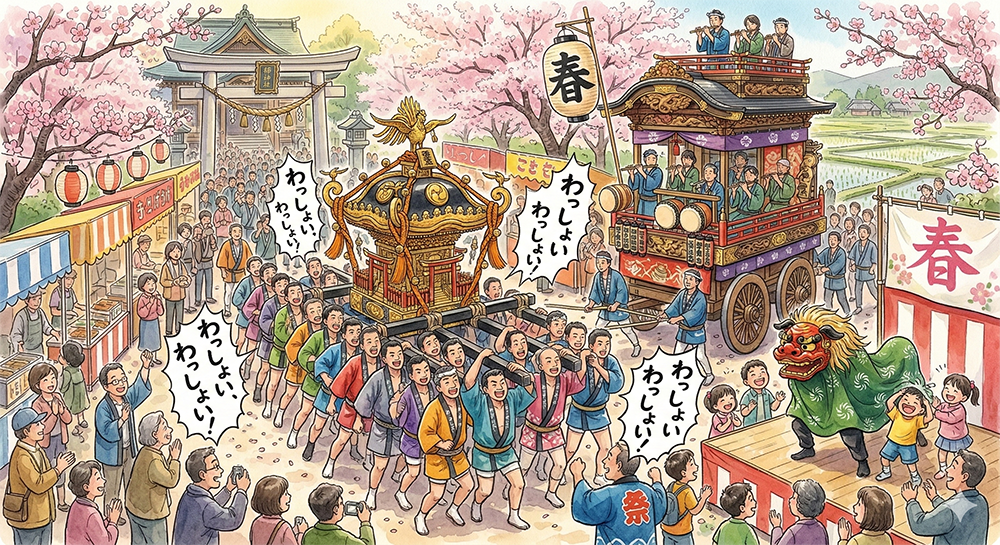
Mikoshi (portable shrines) are carried, dashi (festival floats) are pulled, and lion dancers perform. These festivals mark the start of the farming season and pray for a bountiful harvest.
Why are so many festivals held in spring? And what exactly is a mikoshi?
The cluster of festivals in spring is deeply tied to Japan's farming culture.
🌾 Praying to the Gods Before Rice Planting
Since ancient times, Japan has been an agricultural society centered on rice. Spring is the important season when preparations for rice planting begin, and the custom of holding shrine festivals to pray for a good harvest grew from this.
At spring festivals, the god is carried around the area in a mikoshi, which is believed to spread divine blessings over the fields and homes. While autumn festivals give thanks for the harvest, spring festivals carry the meaning of yoshuku: celebrating in advance to pray for the success of the farming work to come.
Viewing Tips
Each region's spring festival has its own character.
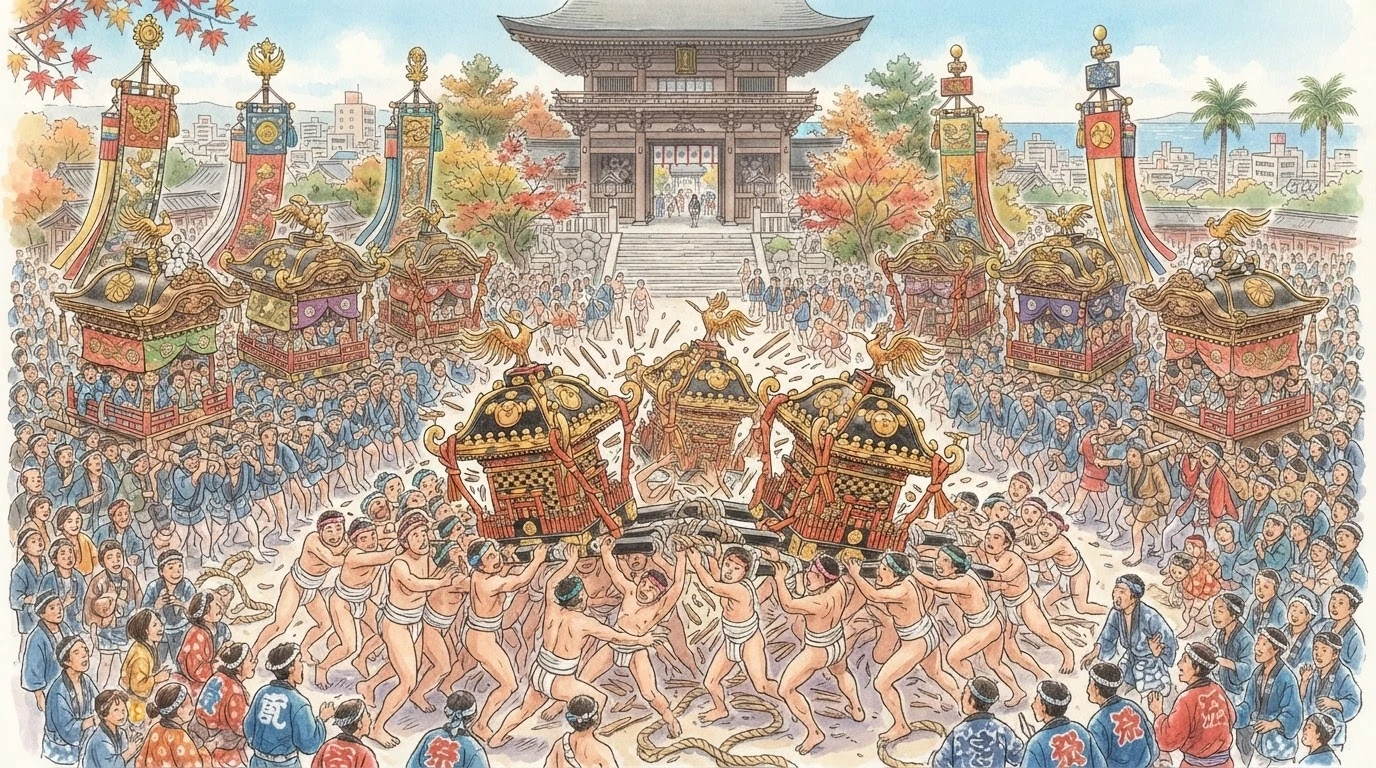
- Mikoshi: The ujiko (local parishioners) carry the mikoshi, the god's vehicle, through the streets. With chants of "wasshoi, wasshoi," the mikoshi sways violently in a thrilling display.
- Dashi: Lavishly decorated floats make their way around the neighborhood. On top of the floats, musicians play hayashi festival music on flutes and drums, and sometimes dances are performed to the music.
- Shishimai: A traditional performing art in which a shishi (an imaginary lion-like creature) dances. Having your head bitten by the lion is said to ward off bad luck, and you may see children having their heads "bitten."
🎌 Famous Spring Festivals
Distinctive spring festivals are held around the country, such as the Spring Grand Festival at Nikko Toshogu (Tochigi Prefecture), the Atsuta Festival at Atsuta Jingu (Aichi Prefecture), and the free opening of the Shin-en garden at Heian Jingu (Kyoto). They often coincide with cherry blossom season, and in some areas you can enjoy full-bloom cherry trees and a festival at the same time.
The weight of the mikoshi, the splendor of the floats, the sound of the drums, the energy of the crowds.
These are locally rooted traditions that let you feel the arrival of spring in Japan with your whole body.