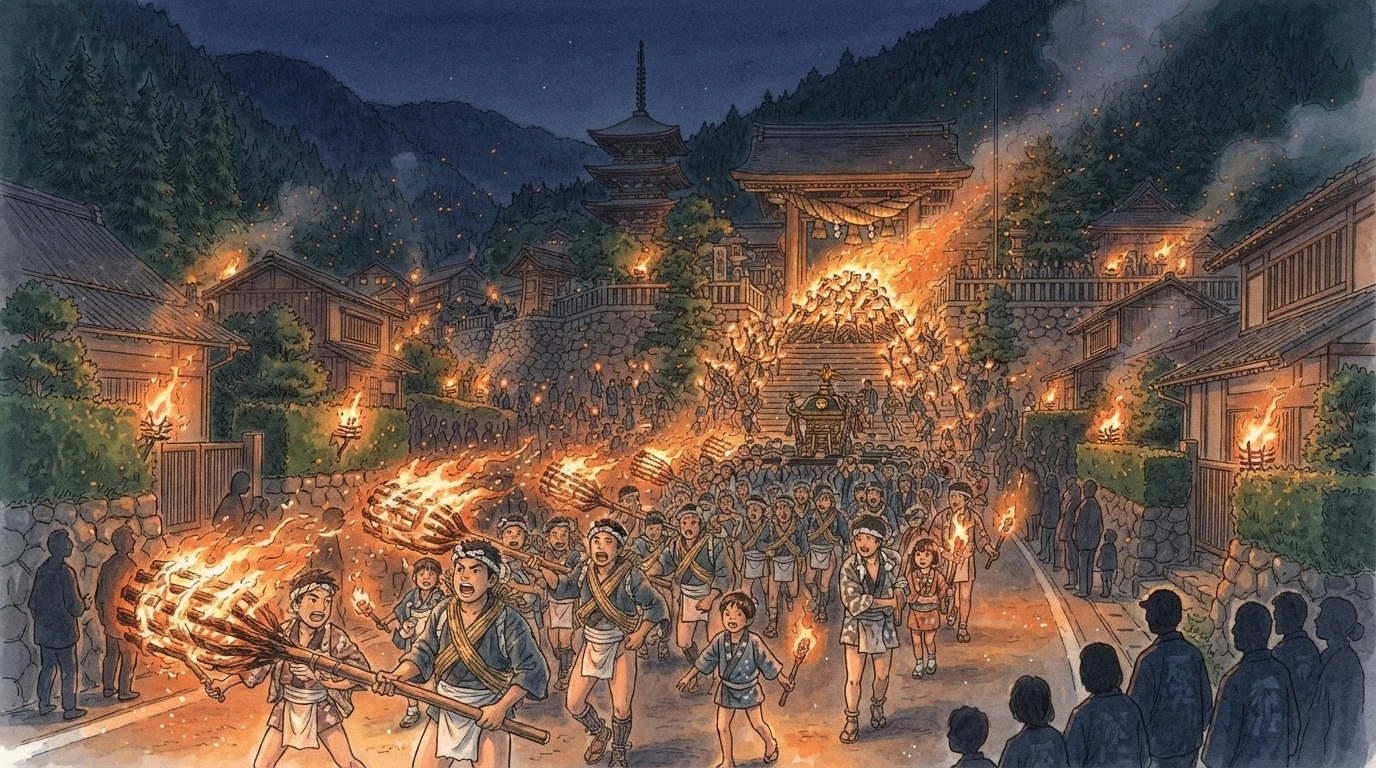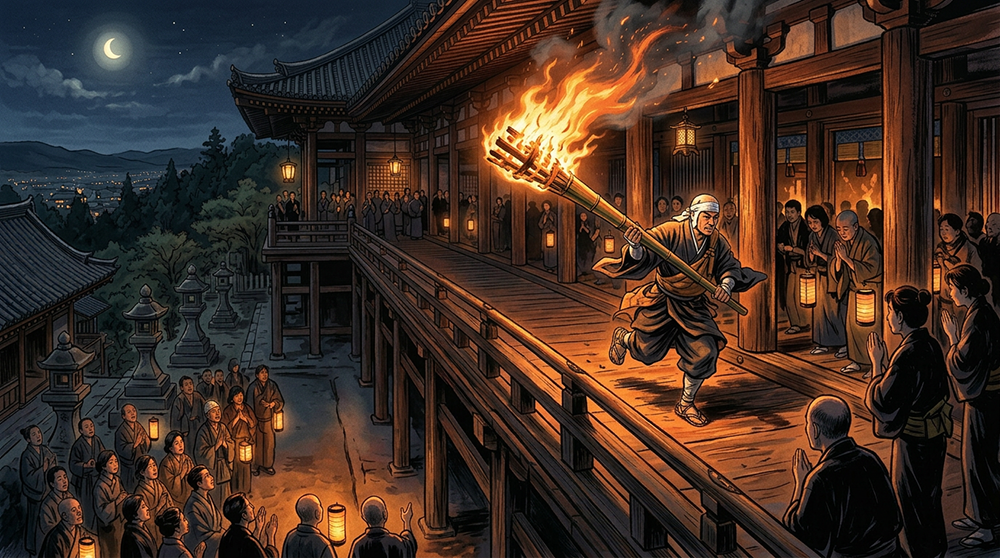
The ritual runs from March 1 to 14, and late on the night of March 12, the flames of giant torches light up the balcony of Nigatsudo Hall at Todaiji in Nara.
This is the climax of Omizutori (the Water-Drawing Ceremony), formally called Shuni-e.
Why light fires in the middle of the night? And how has it continued for more than 1,270 years?
Step into the world of one of Japan's oldest religious rites, which has never once been interrupted since the Nara period.
🔥 A Ritual of Fire and Water, Praying for Peace in the World
Omizutori is a Buddhist ritual said to have begun in 752 (the Nara period), formally called Shuni-e. Monks seclude themselves in Nigatsudo Hall for two weeks, repenting on behalf of the people for their sins and impurities, and praying for peace in the realm and bountiful harvests.
Late on the night of March 12, a ceremony is held to draw sacred water called okozui from a well named Wakasa-i. This water is believed to flow from the Onyu River through an underground channel linking Nara and Fukui.
Viewing Tips
Omizutori is a religious experience you feel with your eyes, ears, and nose.
- The power of the torches: Monks carry giant torches, about 8 meters long and weighing about 70 kilograms, and run along the balcony. The showers of sparks are breathtaking, and being touched by the sparks is said to bring good health.
- Chanting and conch shells: The voices of chanting sutras, the sound of conch-shell horns, and the ringing of bells echo through the silence, creating a sacred atmosphere.
- "When Omizutori ends, spring arrives": In Nara it has long been said that the end of Omizutori signals the coming of spring. In fact, temperatures do begin to rise around this time.
📜 1,270 Years Without a Single Interruption
The wars of the Sengoku period, the great fires of the Edo period, and World War II: through countless hardships, Omizutori has never once been suspended. Protected by the devotion of the monks and the support of local people, it is a symbol of Japanese religious culture.
For the 14 days from March 1, a different ritual is held each night, but the "water drawing" and torches late on the night of the 12th are the most famous.
The heat of the flames in the cold night air and the power of prayers that have continued for more than a thousand years. It is a solemn ritual that heralds spring in Nara.